
F-35 and MQ-20: A New Manned-Unmanned Teaming Step
F-35 and MQ-20 in a joint autonomy test
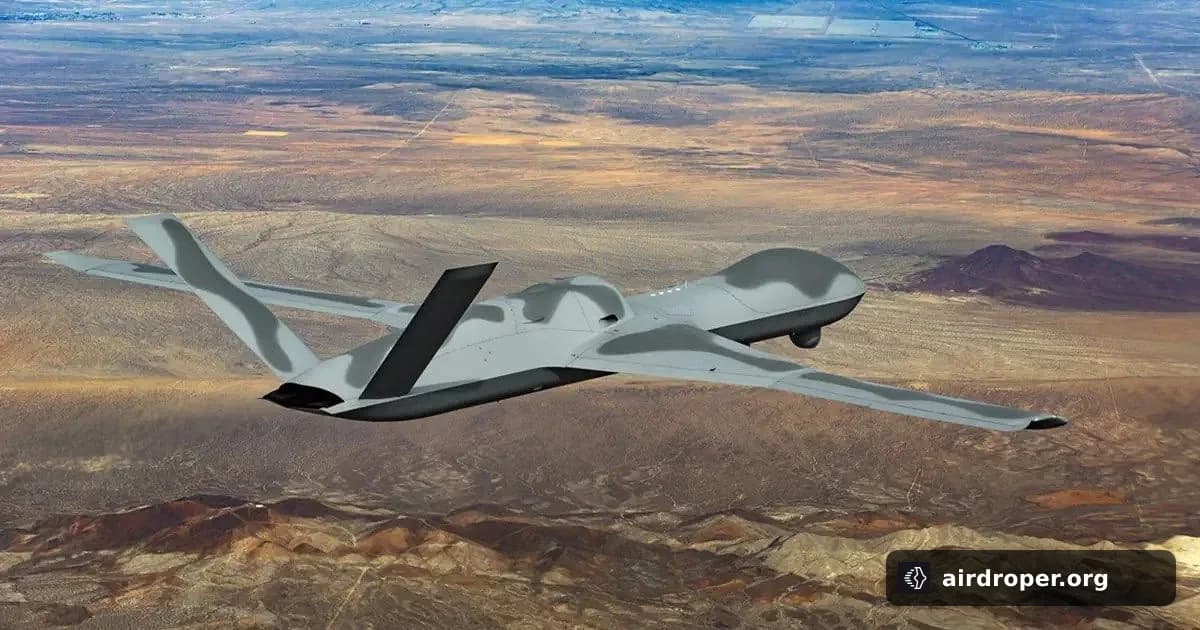
General Atomics Aeronautical Systems, the F-35 Joint Program Office, flight test and software organizations, and industry partners including Lockheed Martin and Autonodyne recently took part in a flight demonstration focused on manned-unmanned teaming. The test paired an F-35 Lightning II with a MQ-20 Avenger® acting as a Collaborative Combat Aircraft surrogate.
The point of this kind of exercise is not simply to fly two aircraft at the same time. It is to examine how a piloted fighter and an autonomous uncrewed platform can cooperate inside the same mission set. That makes it a useful step toward future air combat concepts built around mixed teams rather than single aircraft operating alone.
Why the concept matters
Manned-unmanned teaming is increasingly seen as a major path in combat aviation. A piloted fighter can gain more options for sensing, coordination, and mission distribution, while the uncrewed aircraft can absorb tasks that would otherwise place more burden on the pilot.
In this case, the MQ-20 Avenger served as a surrogate for a future collaborative combat aircraft. That detail matters because it shows the test was not only about a specific airframe, but also about the control logic, mission flow, and interaction between systems. Those are the building blocks for operational concepts where one crewed aircraft may direct or coordinate multiple uncrewed assets.
What the demonstration signals
The involvement of GA-ASI, the F-35 program office, the 309th Software Engineering Group, the 461st Flight Test Squadron, the 370th Flight Test Squadron, Lockheed Martin, and Autonodyne highlights how many parts must come together for autonomy to move from concept to capability.
For air forces, the real shift is structural: the future combat aircraft is increasingly being viewed as part of a networked air team. In that model, autonomy helps distribute risk and workload, while the crewed platform focuses on command-level decisions.
This flight test does not represent a finished fielded system, but it does confirm the direction of travel. Integration between crewed and uncrewed aircraft is no longer a theoretical idea — it is becoming a practical development track in modern military aviation.
Related Posts


Comments
Sign in to leave a comment