
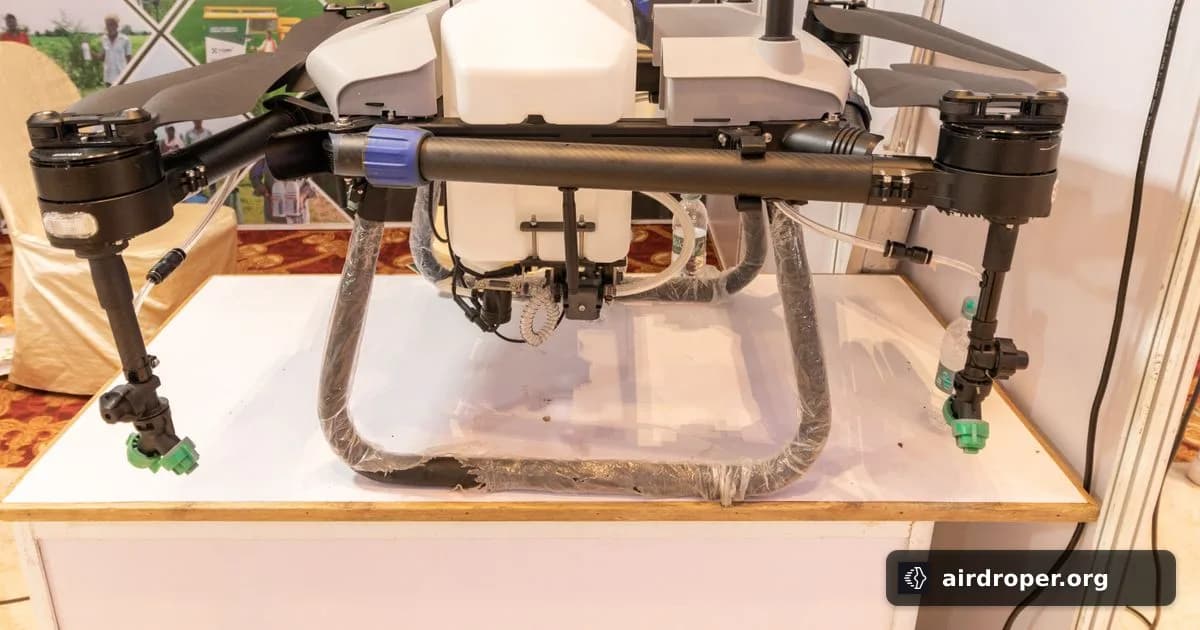
Phase Two of the $1.1 Billion Drone Dominance Program: Mass Procurement of Attack UAVs
The U.S. Doubles Down on Drone Warfare
The U.S. Department of War has officially launched Phase Two of its Drone Dominance Program, a $1.1 billion initiative designed to reshape how the military approaches unmanned strike capabilities. The centerpiece of this phase: procuring 30,000 low-cost, one-way attack drones through a structured four-stage competition.
What Phase Two Actually Means
The program targets two distinct operational scenarios — long-range precision strikes and close-quarters tactical engagements. Rather than investing in a single high-end platform, the strategy leans into volume and versatility.
The four-stage competitive process is designed to:
- Filter out solutions that can't meet cost and scalability benchmarks
- Identify manufacturers capable of rapid mass production
- Validate performance across multiple mission profiles
- Ensure long-term supply chain reliability
The Logic Behind Disposable Drones
One-way attack drones — often called loitering munitions or kamikaze drones — have proven their battlefield value in recent conflicts. Their core advantage isn't sophistication; it's economics and mass. Flooding a contested zone with affordable strike assets creates tactical pressure that expensive, multi-mission platforms simply can't replicate at scale.
A fleet of 30,000 units signals a shift from drone use as a specialized tool to drone use as a standard battlefield resource.
Industry Implications
For UAV component manufacturers and flight controller developers, this kind of program sends a clear message: the market is moving toward standardized, production-ready systems that can be integrated quickly and manufactured at volume.
The emphasis on scalability means that modular, well-documented autopilot and avionics solutions will be increasingly attractive to prime contractors competing in programs like this.
The Bigger Picture
The Drone Dominance Program is part of a broader global shift in military thinking. Armies worldwide are recognizing that quantity, cost-efficiency, and autonomy are becoming as strategically important as raw technological capability.
For the UAV industry, this isn't just a procurement story — it's a roadmap for where demand is heading.
Related Posts
Comments
Sign in to leave a comment