
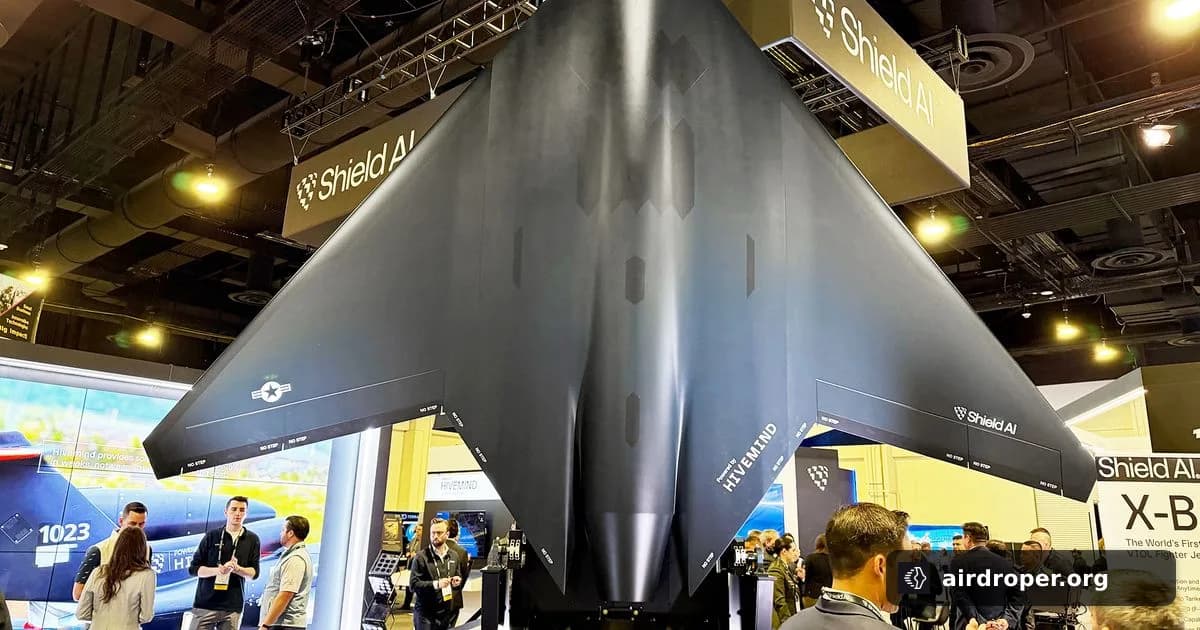
X-BAT Autonomous VTOL Drone Pushes the Boundaries of Unconventional Design
X-BAT: An Unconventional VTOL Taking Shape
Among the growing number of autonomous combat drone programs, X-BAT stands out — not just for its capabilities, but for its striking and unconventional appearance. The vertical takeoff and landing (VTOL) platform has undergone dramatic visual and engineering changes throughout its development, signaling an aggressive and iterative design process.
Thrust Vectoring from an Unlikely Source
One of the most technically notable aspects of X-BAT's development is its use of a thrust vectoring nozzle sourced from an experimental F-16 aircraft. The circumstances of acquiring this component have been described in almost cinematic terms — reportedly obtained in an improvised, resourceful manner that developers likened to something out of an adventure film.
Thrust vectoring technology provides several key advantages for autonomous VTOL platforms:
- Directional control without relying solely on conventional aerodynamic surfaces
- Improved maneuverability at low airspeeds, critical during takeoff and landing phases
- A smoother transition between vertical and horizontal flight modes
For an autonomous system, this kind of agility could prove decisive in complex operational environments where standard fixed-wing or multirotor drones face significant limitations.
Iterative Design as a Feature, Not a Bug
The fact that X-BAT looks dramatically different across development stages reflects a modern engineering philosophy increasingly common in advanced UAV programs. Rather than committing to a single design early on, development teams test aggressively, discard what doesn't work, and evolve the platform rapidly.
This is particularly relevant for VTOL aircraft, where the engineering trade-offs between lift efficiency, payload capacity, aerodynamic performance, and structural weight are notoriously difficult to balance.
Why Autonomous VTOL Matters
X-BAT fits into a broader strategic shift toward autonomous VTOL combat platforms that can operate without traditional airfield infrastructure. The combination of vertical takeoff capability and autonomous decision-making significantly expands the tactical flexibility of such systems.
The program's accelerating pace suggests the development team is moving with clear intent. Whether X-BAT will evolve into a fielded platform remains to be seen, but its development trajectory makes it one of the more technically ambitious autonomous air vehicle programs to watch.
Related Posts

Comments
Sign in to leave a comment