
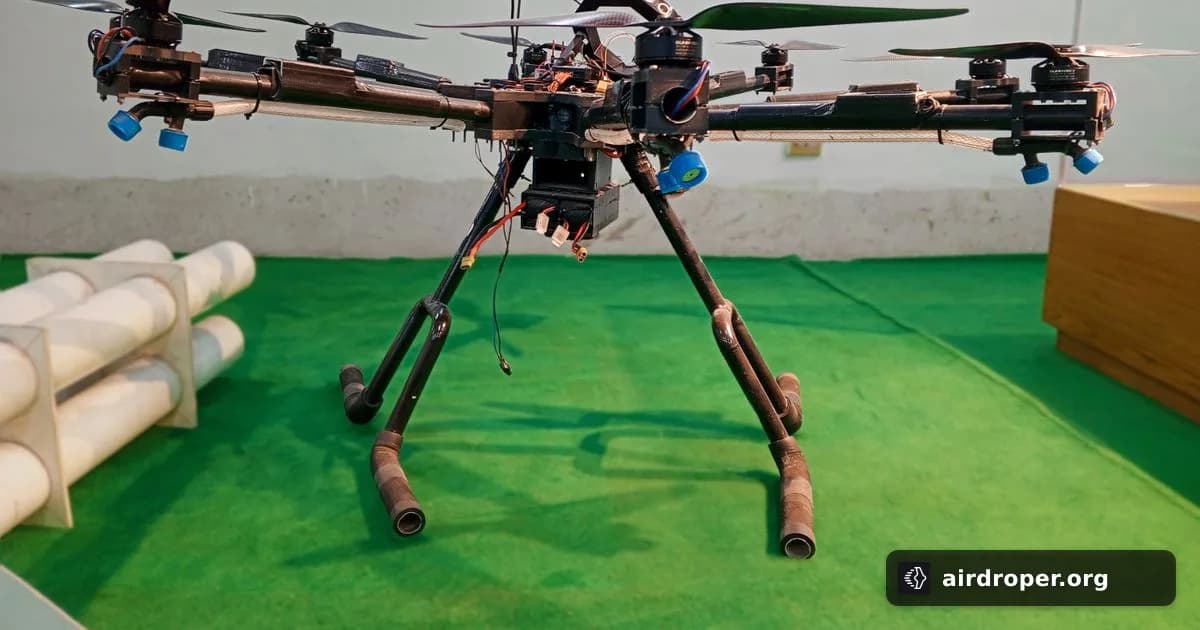
Aerial Mapping and the First Amendment: When Drone Pilots Go to Court
When a Drone Becomes a Pen
For most of its short history, commercial drone operation has been treated primarily as an aviation activity — governed by airspace rules, licensing requirements, and safety protocols. But a legal case unfolding in the United States is challenging that framing in a fundamental way.
Michael Jones, operator of 360 Virtual Drone Services LLC, is taking his case to court with a compelling argument: aerial imaging is a form of expression protected by the First Amendment. If photographers and journalists can document the world from public spaces, why should drone operators face additional regulatory barriers to do the same from the air?
The First Amendment Argument
The lawsuit centers on whether restrictions placed on commercial aerial mapping constitute an infringement of constitutionally protected free speech. The logic is straightforward — capturing images and video is widely recognized as expressive activity. Courts have previously affirmed photography as a protected form of expression.
The question now is whether that protection extends to the altitude at which a drone operates, and whether commercial intent changes the legal calculus. These are not trivial distinctions. The answers will shape how regulators, courts, and operators understand the rights attached to UAV-based documentation.
Industry Implications
The outcome of this case matters well beyond one pilot's business:
- Commercial mapping operators could gain legal standing to challenge overly broad local restrictions
- Regulators may need to more carefully justify where safety rules end and content-based restrictions begin
- Developers of mapping and inspection platforms will have greater clarity on the legal environment they operate in
A Global Conversation
While this case is specific to US law, the underlying tension is universal. Drone operators worldwide face a patchwork of regulations that often blur the line between flight safety and control over information. As UAVs become standard tools in agriculture, infrastructure inspection, urban planning, and journalism, legal frameworks need to evolve accordingly.
The broader question this lawsuit raises is worth considering in any regulatory context: is a drone pilot primarily an aviator, a data collector, or a content creator? In practice, they are often all three — and the law is still catching up.
Related Posts
Comments
Sign in to leave a comment