
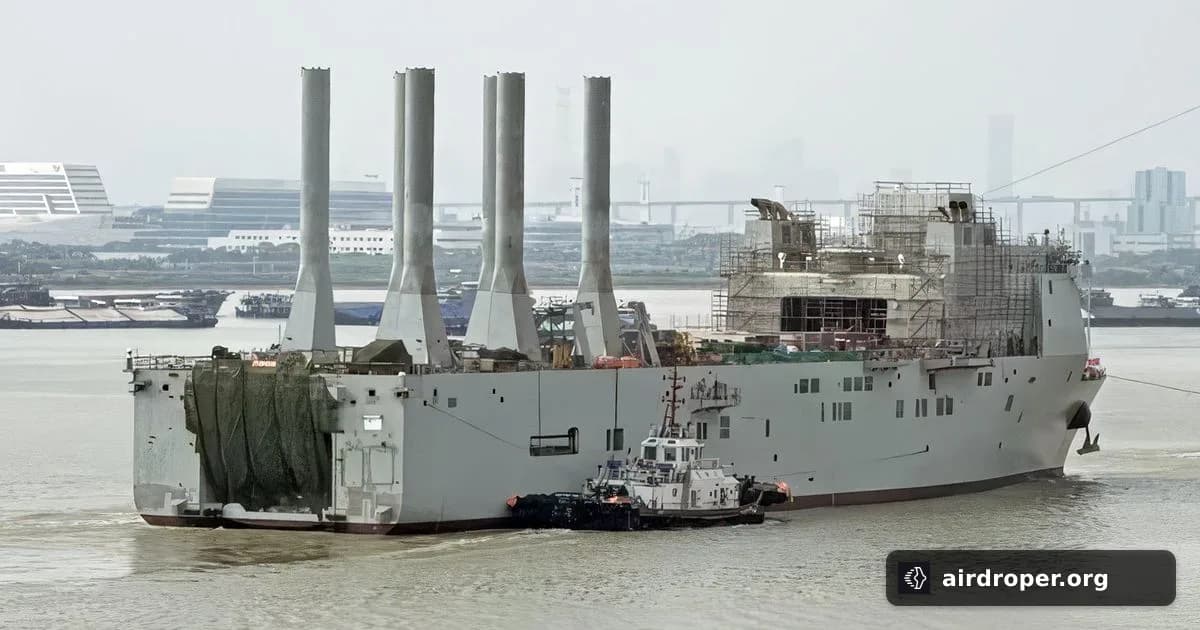
China Unveils Its Second Drone Submarine Mothership
A second platform for underwater drones
China has revealed another submarine drone mothership, this time a smaller version of the first known platform. The development suggests that the concept is moving beyond a single prototype and into a more mature stage of testing or deployment.
A specialized shipyard role
According to the source, the vessel was built by Guangzhou Shipyard International, a shipbuilder known for producing special-purpose vessels. That detail matters: specialized yards are often where unconventional naval concepts are turned into working platforms, especially when a design needs to support nonstandard missions and equipment.
The smaller size of the new mothership may point to a different operational profile. It could be intended to simplify construction, reduce operating costs, or support a narrower set of underwater systems. In naval drone programs, the carrier platform is often just as important as the drones themselves, because it shapes how the vehicles are launched, recovered, transported, and maintained at sea.
Why this matters
A second mothership indicates that underwater unmanned systems are gaining structural support, not just attention as a one-off concept. For modern navies, that can translate into broader use in missions such as:
- reconnaissance and surveillance;
- seabed mapping;
- mine countermeasures;
- support for specialized maritime operations.
Even without many technical details about the drones onboard, the emergence of another carrier platform signals sustained interest in underwater autonomy. It also highlights a broader trend in military technology: the ecosystem around unmanned systems is becoming more important than any single vehicle.
The bigger picture
For the maritime drone sector, the key competition is no longer limited to drone design alone. The platforms that carry, deploy, and support those drones are becoming strategic assets. A smaller second mothership suggests China is continuing to refine that system, potentially building a more flexible underwater operations architecture over time.
Related Posts
Comments
Sign in to leave a comment