MQ-9B SeaGuardian: The Maritime Drone Built to Fly Alongside the P-8 Poseidon
A New Standard for Maritime Surveillance
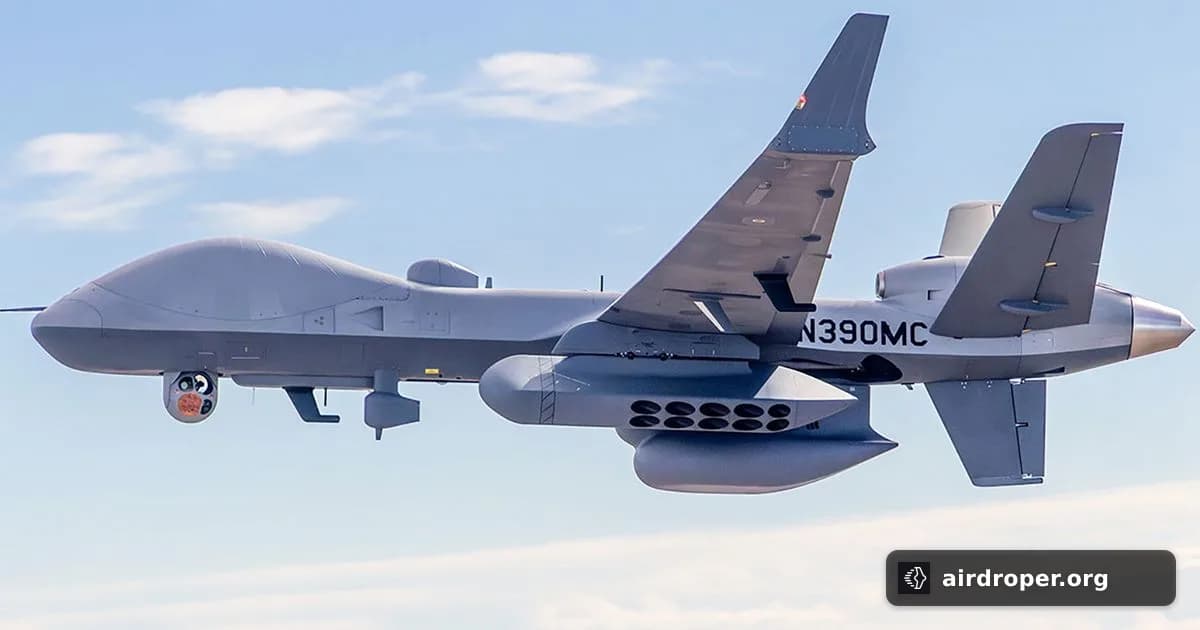
Modern naval operations demand more than just aerial presence — they require persistent surveillance, rapid response, and seamless coordination between multiple platforms. The MQ-9B SeaGuardian, developed by General Atomics, is designed to meet exactly these requirements.
Built as a dedicated maritime variant of the widely-used MQ-9 Reaper, the SeaGuardian focuses on extended ocean patrol, surface and subsurface target tracking, and close integration with manned maritime patrol aircraft.
Flying Alongside the P-8 Poseidon
A central part of the MQ-9B's operational concept is its ability to team with the Boeing P-8 Poseidon — the primary maritime patrol aircraft of the U.S. Navy and numerous allied forces. This pairing creates a powerful division of labor: the P-8 handles active anti-submarine warfare tasks, while the SeaGuardian provides broad-area ocean surveillance simultaneously.
This kind of Manned-Unmanned Teaming (MUM-T) is increasingly becoming the operational norm across military aviation. Rather than replacing crewed aircraft, advanced drones like the SeaGuardian extend their reach and effectiveness.
What Makes SeaGuardian Stand Out
Several technical features make the MQ-9B particularly suited to the maritime domain:
- Endurance of 30+ hours — essential for covering vast ocean areas on a single sortie
- Multi-mode maritime radar — capable of detecting surface targets in adverse weather conditions
- Automatic Identification System (AIS) — real-time vessel tracking across large areas
- Modular sensor payload — adaptable to different mission profiles
Broader Industry Implications
The evolution of platforms like the MQ-9B signals a fundamental shift: unmanned systems are no longer supplementary tools — they are becoming equal partners in complex multi-domain operations. For engineers and manufacturers working on flight controllers, autopilots, and avionics, this trend translates into growing demand for robust, certifiable systems capable of safe integration into joint manned-unmanned environments.
The maritime sector remains one of the most demanding arenas for UAV technology — harsh conditions, extreme distances, and the need to operate in close proximity to crewed aircraft push hardware and software reliability to their absolute limits.
Related Posts
Comments
Sign in to leave a comment