Navy Reconsiders a Carrier Combat Drone Concept
The Navy’s Interest in Carrier Drones Returns
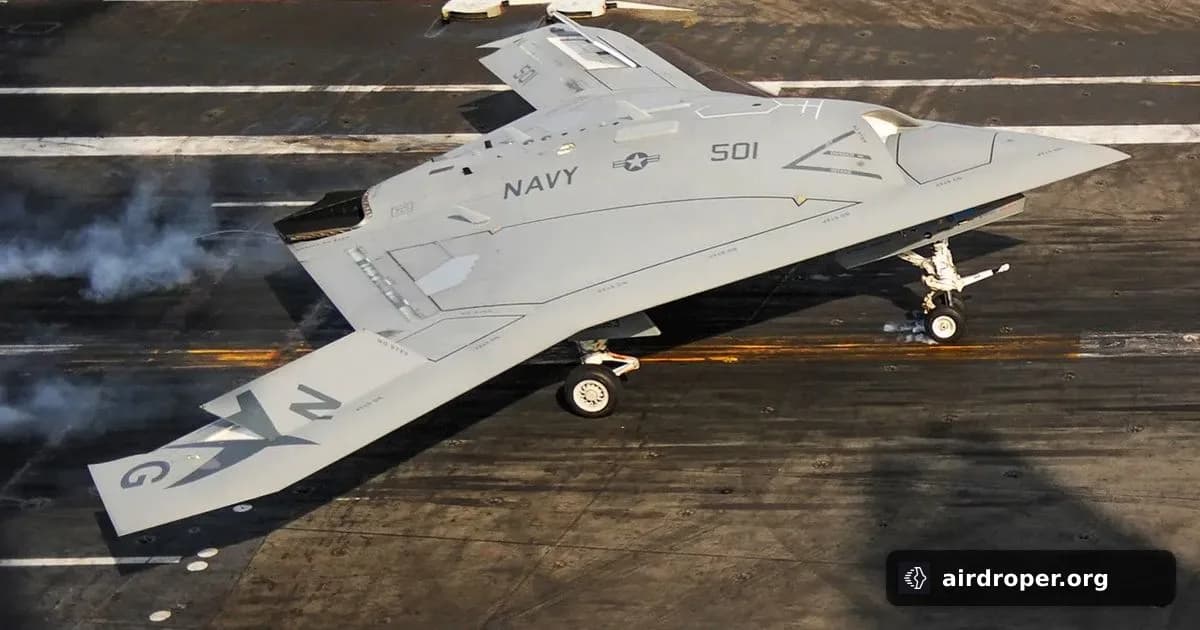
The U.S. Navy appears to be revisiting an idea it set aside years ago: a carrier-based combat drone built for long reach, heavy payloads, and operations in contested airspace. That description fits the old X-47B concept almost too well. The platform was designed to prove that an unmanned aircraft could launch from, recover aboard, and operate from an aircraft carrier while carrying meaningful combat capability.
A decade ago, the program did not lead to the follow-on combat drone many expected. Other priorities took over, and the Navy moved away from the concept. Now the strategic environment has changed. Drones are no longer niche tools; they are becoming central to how militaries think about strike, reconnaissance, and survival in highly defended skies.
Why the Concept Matters Now
A carrier drone with substantial weapons capacity could help close several gaps at once. It would extend the reach of the carrier air wing, reduce risk to aircrew, and create a platform that can be sent deeper into dangerous areas than a manned aircraft might be willing to go. In practical terms, that means more options for strike missions, suppression of enemy defenses, and long-range sensing.
The appeal is not just distance. The aircraft must also be able to function in contested environments where electronic warfare, radar coverage, and surface-to-air threats are dense. That pushes requirements beyond endurance alone. Survivability, autonomy, and integration into a larger command-and-control network become just as important as payload.
What X-47B Proved
The X-47B was never a mass-produced weapon system, but it mattered because it demonstrated the fundamentals. It showed that carrier operations for an unmanned aircraft were not science fiction. Catapult launches, deck recoveries, and autonomous handling aboard a carrier were all part of the program’s legacy.
That legacy is now relevant again because the technology base has moved on. Autonomy has matured, sensor suites are better, and naval planners are increasingly focused on systems that can operate where manned aircraft face unacceptable risk. If the Navy really does return to this path, it would not simply be buying a drone. It would be building a new layer of strike capacity for carrier aviation.
Related Posts
Comments
Sign in to leave a comment